


Accessibility tools

People, workplace capability and organisational improvement

Helping people, workplaces and organisations succeed.

Most workplace training builds knowledge, not skill. People finish knowing about the work without being able to do it. We investigate how your people learn and work, then combine inclusive design and AI to build real skill, confidence and performance.

SkillFusionAI organisational research workspace

What the research shows

Active, practical learning builds doing, not only knowing.

398

studies pooled in a 2023 meta-analysis

Active, hands-on learning produced large gains in both what people learn and what they retain, well beyond passive instruction. The effect sizes landed near one standard deviation, a wide margin in education research.

Meta-analysis of active learning, 2023

Qualified, not job-ready. Employers report new hires hold the credential but not the practical skill.

Jobs and Skills Australia, 2024

Everyone gains. Designing for the full range of learners lifts engagement and results across the board, not only those with a barrier.

Systematic review, 2023

Confirmed again in 2024. Experiential learning outperformed traditional teaching across every knowledge area tested.

Experimental study, 2024

The pattern holds across current research. People learn to do by doing, in more than one mode, and AI now makes those modes affordable to build. Design training this way and more of your team performs, and more of the community with them.

How we work

People first. Evidence second. Technology where it helps.

Organisations

When the system is unclear, people carry the weight.

Technology should never be the starting point. Real improvement begins by understanding how people learn, communicate and work. Evidence identifies where change is needed. Technology, including AI, becomes one of the tools used to create practical solutions that are easier to understand, apply and sustain. Many workplace problems are not caused by people. They are created by unclear processes, disconnected information, inconsistent training or systems that no longer support the way people actually work. Improving capability starts by understanding how work happens today, not by assuming another system or another course will solve the problem.

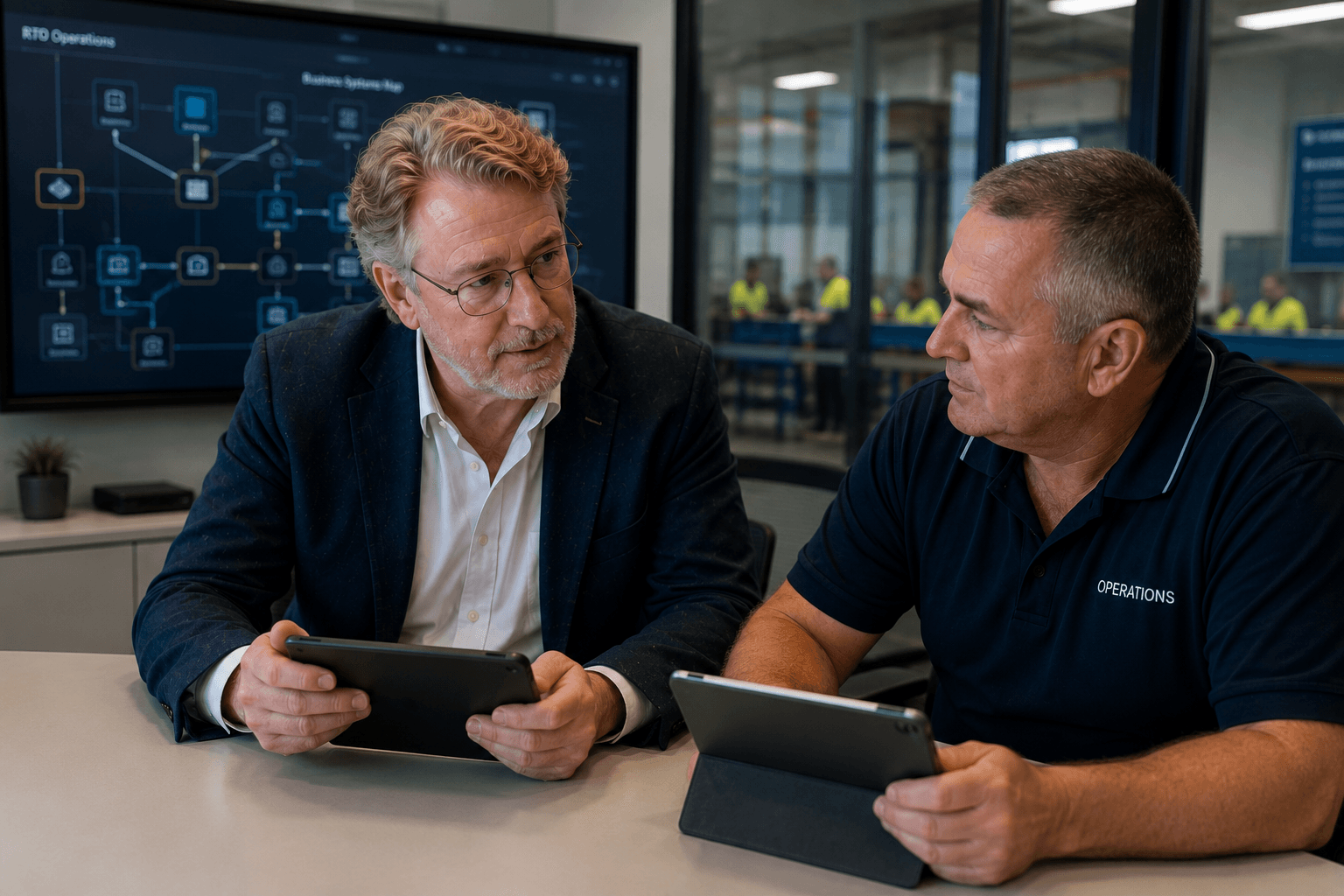
Business systems research workspace

Discover

Understanding before recommending.

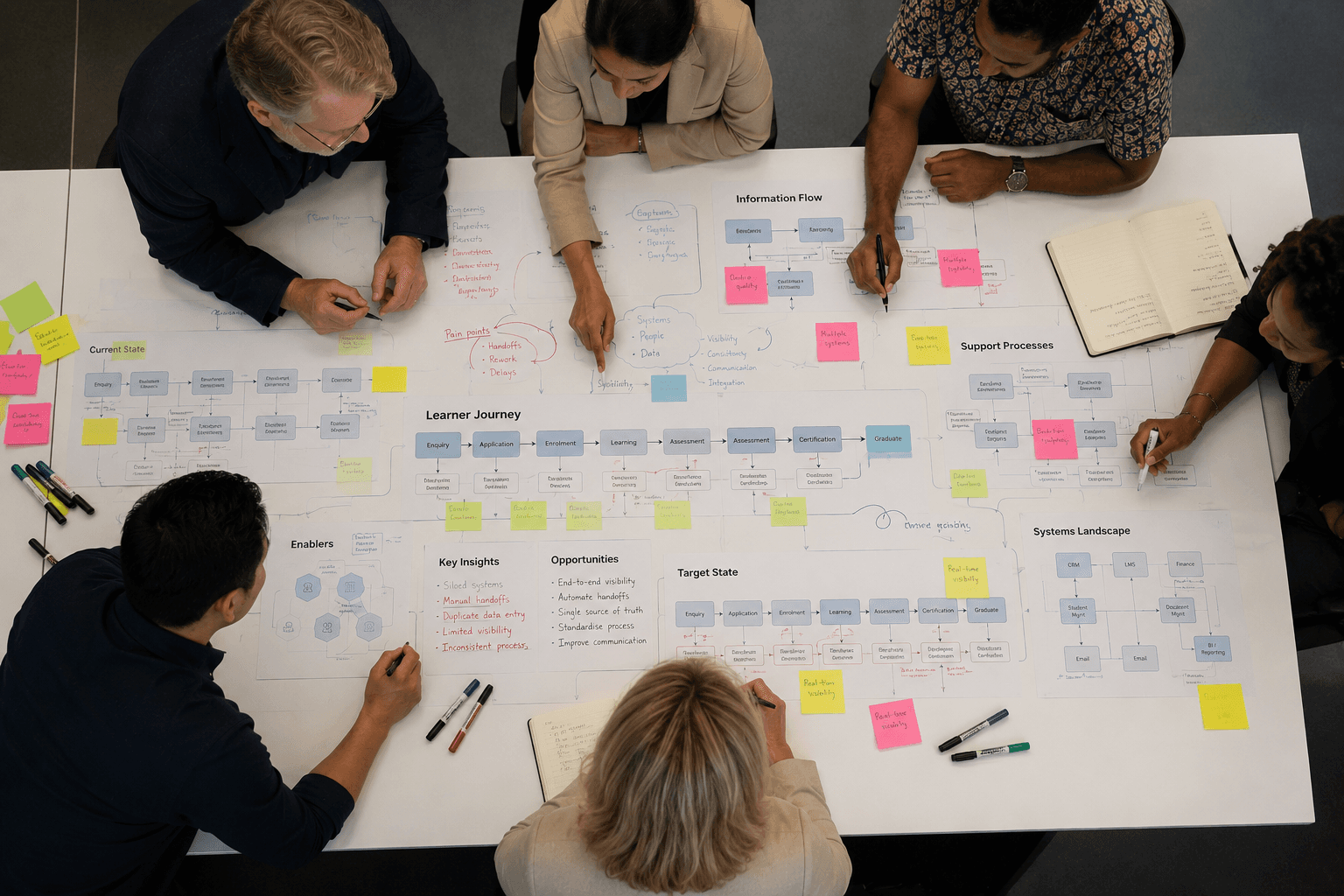
Every organisation already has strengths. Our role is to understand how people learn, how work flows, where communication breaks down and where unnecessary barriers exist. This creates the evidence needed to make informed decisions rather than expensive assumptions.

Research material arranged for discovery work

Investigate

Practical evidence before recommendations.

We hear the same concern across industries. People complete training, but they still do not have the practical skills to do the job confidently. Skills are developed through understanding, practice and application, not simply by completing an assessment. Our role is to find out what is preventing that learning from becoming real workplace capability. Sometimes the issue is learning design. Sometimes it is workplace systems, communication or the way information is presented. Sometimes technology can help. Every recommendation is based on practical evidence so organisations invest in improvements that strengthen confidence, performance and productivity instead of guessing what might work.

Investigation desk with documents and notes

Education and Training

Contextualisation is more than changing a few words.

In vocational education, contextualisation is often treated as replacing names, workplaces or examples while leaving the learning experience unchanged. Real contextualisation redesigns the learning experience. It connects learning to practical workplace tasks, supports different communication styles and gives people meaningful opportunities to understand, practise and apply what they learn. This builds the confidence and capability needed in real workplace situations. That is the difference between compliance and capability.

Hospitality business research and planning materials

Technology

AI makes better learning possible

Reasonable adjustment, built into the tool (ASQA 2025 Standards). Try the control on each card.

Hospitality

A café owner drops the week's till data and last month's supplier invoices into the tool. AI sorts the lot, lines sales up against costs and flags the coffee bean price creeping up three weeks running. She reads the one-page summary over Monday coffee, rings the supplier and switches brands.

The tool found the pattern. She made the decision.

Neurodivergent support

An apprentice with ADHD opens a unit and hits a wall of text. He taps once, the tool breaks it into short steps and reads each one aloud. He answers by voice, the tool turns his words into draft notes, he edits them into his own. Same competency, met his way.

He did the thinking. The tool cleared the barrier.

RTO admin (T4NOW)

A trainer walks into a validation session with a pile of assessment records. She loads them into T4NOW, which groups them by unit and flags two units short on evidence. She asks a question, T4NOW drafts the response, she checks it against her RTO's context and signs off.

T4NOW drafts. She owns the compliance call.

Train4NOW

Turning research into practical workplace learning.

Train4NOW applies the research and frameworks developed through SkillFusionAI to create practical learning experiences to build workplace capability. Rather than relying on reading, videos and written assessments alone, learning is supported through multiple approaches to improve understanding, confidence and practical application.

Explore Train4NOW

Who Train4NOW supports

  • Businesses and organisations
  • Registered Training Organisations (RTOs)
  • Hospitality teams
  • Disability and community services
  • Schools, colleges and universities
  • Trainers and educators
  • Students and apprentices
  • Anyone building practical workplace skills

Designed to support people including those with

  • ADHD
  • Autism
  • Dyslexia
  • Low literacy
  • English as an additional language
  • Anxiety
  • Mature age learners returning to study or work

We recognise people learn in different ways. Designing learning for a wider range of people benefits everyone. When more people understand, apply and retain what they learn, organisations gain more capable teams, stronger workplace performance and better outcomes.